

skip render: ucaddon_color_overlay_button skip render: ucaddon_color_overlay_button MOI Approved CCTV Companies in Qatar: Requirements, Compliance & How to Choose Choosing a CCTV company in Qatar is not only about selecting cameras, recording equipment or a familiar brand. For projects that fall under Ministry of Interior requirements, the CCTV system must also be planned, installed and documented according to the applicable requirements of Qatar’s Security Systems Department. People often search for MOI approved CCTV companies in Qatar, but there is an important distinction to understand: the Ministry of Interior publishes an official list of companies licensed by the Security Systems Department. Gulf Networks Security Solutions is included in the Ministry of Interior’s March 2026 licensed companies list. For property owners, consultants, facility managers and procurement teams, working with an experienced licensed security company helps ensure that CCTV design decisions are considered from the beginning rather than treated as an afterthought. For complete system design and installation services, explore our CCTV Installation in Qatar solutions. What Does “MOI Approved CCTV Company” Mean in Qatar? The phrase “MOI approved CCTV company” is commonly used by customers when searching for an installer or security contractor. The official terminology used by Qatar’s Ministry of Interior is a company licensed by the Qatar Ministry of Interior Security Systems Department. This distinction matters because compliance is not created simply by buying a particular camera brand. A compliant CCTV project can involve the complete system design, including camera positioning, recording, storage, network architecture, monitoring, installation quality, documentation, testing and the requirements that apply to the particular facility. Is Gulf Networks Security Solutions Licensed by Qatar MOI? Yes. Gulf Networks Security Solutions is included in the official September 2026 list of companies licensed by the Qatar Ministry of Interior Security Systems Department. The official list identifies Gulf Networks Security Solutions as entry No. 3. GNSS has been operating in Qatar since 2005 and provides CCTV and integrated security-system design, supply, installation, configuration, testing, maintenance and technical support. Rather than simply supplying cameras, GNSS approaches a project as a complete surveillance system covering cameras, recording, storage, networking and monitoring. What Are the MOI CCTV Requirements in Qatar? There is no single camera layout or CCTV specification that should be applied blindly to every building. The Qatar Ministry of Interior Security Systems Department publishes technical requirements for different types of facilities. These can include hotels and hotel apartments, residential complexes, banks and exchange businesses, retail and commercial facilities, hospitals and clinics, warehouses, sports facilities and other regulated properties. This is why CCTV design should begin with the facility type and applicable requirements, rather than with a generic camera package. Depending on the project, important design considerations may include: Camera coverage and positioning Required image quality Entrances and exits Recording architecture NVR capacity Storage and retention Monitoring requirements Network security System documentation Testing and commissioning Preventive maintenance The exact requirements should always be confirmed for the individual project. Why Camera Brand Alone Does Not Make a System MOI Compliant A common misunderstanding is that installing an “MOI approved camera” automatically makes the complete CCTV system compliant. It does not. Camera selection is only one component of the overall surveillance system. Even professional equipment can perform poorly if cameras are incorrectly positioned, storage is undersized or recording settings are unsuitable. Compliance therefore depends on the complete project implementation and the requirements applicable to that facility. GNSS evaluates camera placement, lens selection, image quality, recording, NVR capacity, storage, networking and video-management requirements as part of the overall CCTV installation process. How to Choose an MOI Approved CCTV Company in Qatar The first step is to verify that the company appears on the current official list issued by the Qatar Ministry of Interior Security Systems Department. After that, evaluate whether the company can deliver the complete CCTV project, rather than simply sell cameras. A professional contractor should be able to: Assess the property Understand the security requirement Prepare appropriate camera coverage Select suitable cameras Design recording and storage Configure network infrastructure Install and commission the system Prepare relevant documentation Test the installation Provide maintenance and technical support Price is important, but selecting an installer solely because it offers the cheapest camera package can create additional costs later. For a detailed explanation of project cost factors, see our CCTV Camera Price in Qatar: Cost & Installation Guide. CCTV Site Survey and Camera Coverage A professional CCTV project normally starts with a site assessment. The objective is to determine what each camera needs to achieve. For example, a camera monitoring a general lobby has a different purpose from a camera covering an entrance, loading bay, perimeter, parking area or restricted access point. Camera location, mounting height, viewing angle, lens, lighting conditions, WDR, infrared performance and image settings can all affect whether footage is actually useful. GNSS therefore plans surveillance coverage around the real operational requirement of each scene, rather than simply maximizing the number of cameras. Request a CCTV Site Survey to discuss the requirements of your project. Recording, NVR and Storage Requirements CCTV compliance and operational reliability also depend heavily on recording. The system design should consider: Number of cameras Camera resolution Frame rate Recording mode Network throughput Storage capacity Retention period Redundancy where required Future system expansion A system with excellent cameras but insufficient storage or an incorrectly sized recorder can fail to meet its intended purpose. Learn more about NVR and CCTV Recording Solutions. Video Management Systems for Larger CCTV Projects Larger sites may require more than a standalone recorder. A Video Management System can provide centralized: Live monitoring Playback Alarm handling User permissions Event management Multi-site surveillance Operator workflows VMS architecture becomes particularly relevant for enterprise, hospitality, government, industrial and other larger CCTV deployments. GNSS can integrate cameras, recording infrastructure, storage and monitoring through suitable Video Management Systems. Hanwha Vision CCTV for Professional Qatar Projects GNSS also provides professional Hanwha Vision CCTV solutions in Qatar. Hanwha Vision offers professional IP surveillance cameras across different camera formats, performance levels and analytics requirements. Depending

CCTV Camera Price in Qatar: Complete Cost & Installation Guide
Understand CCTV camera pricing in Qatar, including camera types, installation, NVR storage, cabling, MOI requirements and the key factors that affect total project cost.
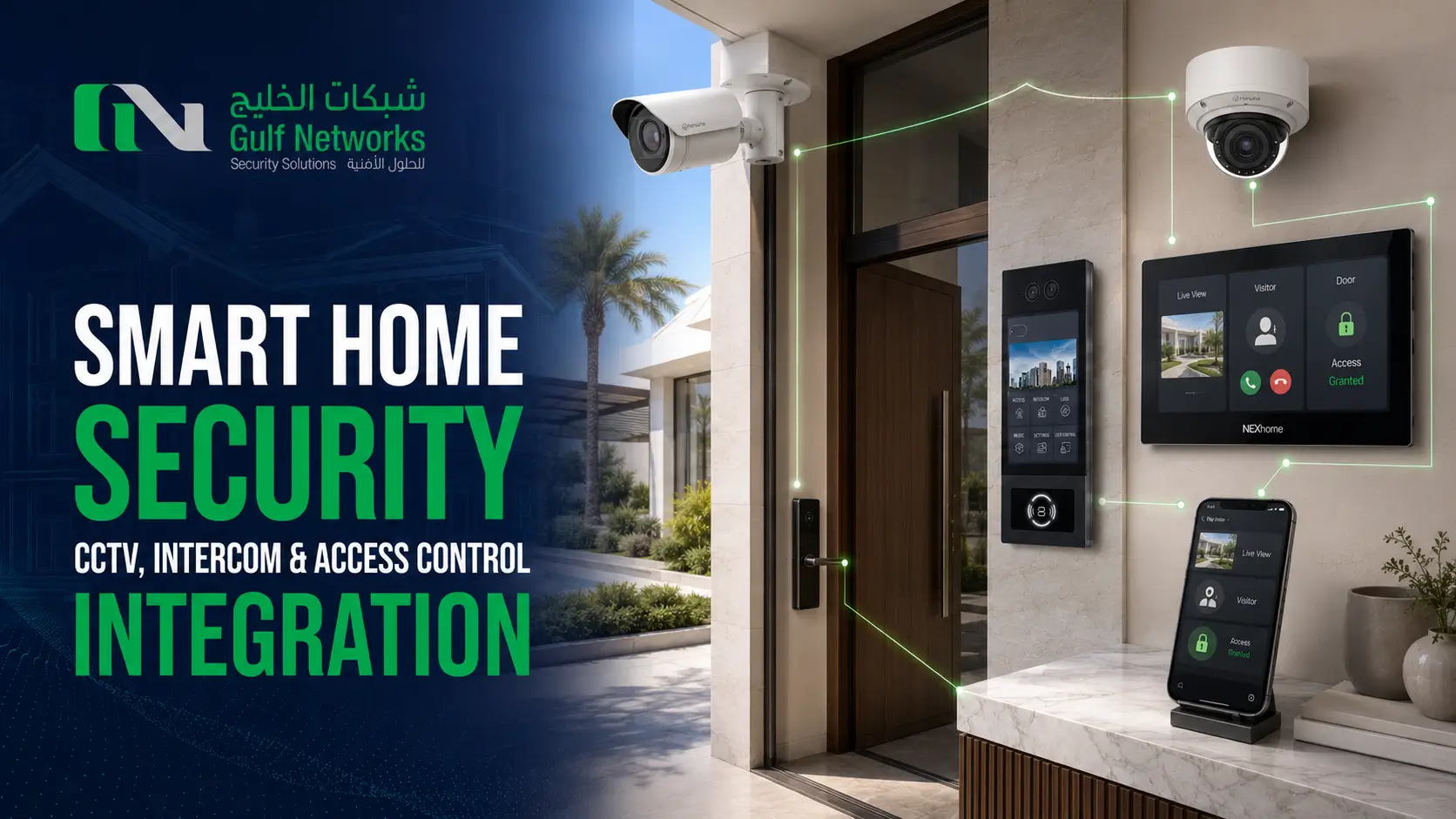
Smart Home Security in Qatar: CCTV, Intercom & Access Control Integration
skip render: ucaddon_color_overlay_button skip render: ucaddon_color_overlay_button Smart Home Security in Qatar: CCTV, Intercom & Access Control Integration Smart home security in Qatar is no longer limited to installing separate CCTV cameras, door locks or alarm devices. Modern villas can combine surveillance, video intercom, access control, smart locks, sensors and automated entry systems into one coordinated environment. When security is integrated with smart home automation, homeowners can manage multiple functions from wall panels, mobile applications and automated scenes rather than operating every system separately. For villas in Qatar, this approach can improve visibility, access management and everyday convenience while keeping security systems easier to operate. What Is Smart Home Security? Smart home security combines traditional security technologies with connected automation controls. A typical integrated solution may include: CCTV cameras Video intercom Smart door locks Access control Door and window sensors Motion sensors Intrusion alarms Gate automation Mobile notifications Remote monitoring Automated security scenes The goal is not simply to install more devices. The real value comes from allowing compatible systems to work together. CCTV Integration for Smart Villas CCTV is one of the most important layers of residential security. A professionally designed CCTV system can help monitor: Main entrances Villa gates Driveways Outdoor areas Side entrances Parking areas Service entrances Selected internal areas where appropriate For villas in Qatar, camera placement should be planned around the actual property layout rather than simply installing as many cameras as possible. GNSS provides professional CCTV installation in Qatar for residential and commercial properties. How CCTV Works With Home Automation When CCTV is integrated with a smart-home system, homeowners may be able to access supported camera feeds from the same environment used for other property controls. Depending on the selected technology, integration may allow: Viewing cameras from a mobile application Checking entrances before granting access Receiving event notifications Combining surveillance with door-entry systems Reviewing activity around gates and entrances The objective is to make security information easier to access without creating an overly complicated user experience. Video Intercom for Villa Entrances A video intercom allows residents to see and communicate with visitors before granting access. For villas, intercom systems are commonly installed at: Main gates Pedestrian entrances Front doors Service entrances Modern video intercom systems can include indoor monitors and mobile-app connectivity. This allows homeowners to verify visitors before opening a door or gate. Integrating Video Intercom With Smart Home Automation A video intercom becomes more useful when it works together with compatible access systems. For example, when a visitor arrives at the villa gate, the homeowner may be able to: View the visitor Speak with them Confirm their identity Unlock the gate or door Monitor the entrance through CCTV This creates a more coordinated entry process and makes security easier to manage. Access Control for Smart Villas Access control determines who can enter specific areas of a property. Residential access-control options can include: Access cards Keypads PIN codes Mobile credentials Biometric readers where suitable Smart locks Remote release Gate controllers Access control can be used for: Main entrances Villa gates Staff entrances Private rooms Service areas Parking access Smart Locks and Door Entry Smart locks can provide a more convenient alternative to traditional keys for selected entrances. Depending on the system, homeowners may be able to use: PIN codes Mobile applications Access cards Temporary guest access Remote unlocking A smart lock should still be selected according to the door type, usage level, security requirements and integration compatibility. Gate Automation and Security Villa security often begins at the property boundary. Automated gates can be integrated with: Video intercom Access control Remote controls Smart-home interfaces Vehicle-entry systems This allows homeowners to manage both pedestrian and vehicle access as part of a wider security strategy. Door and Window Sensors Door and window sensors can help identify when selected openings are opened or closed. These sensors may be useful for: Main doors Balcony doors Windows Service entrances Storage areas When integrated into a smart-home system, sensors can also support automation logic. For example, selected lights or alerts may respond to specific events depending on the system design. Motion Sensors and Intrusion Detection Motion sensors can add another security layer. They may be used in: Corridors Entrances Outdoor areas Staircases Selected internal spaces Sensors can also perform multiple functions. A single occupancy sensor may contribute to both security and lighting automation, depending on the selected system. Smart Security Scenes One of the benefits of integration is the ability to create coordinated automation scenes. Away Mode When leaving the villa, an Away scene could: Switch off selected lights Adjust AC settings Close selected curtains Confirm door status Activate compatible security functions Night Mode A Night scene could: Switch off common-area lighting Keep selected outdoor lights active Adjust AC settings Close curtains Set compatible security devices to the required state The exact functions depend on the installed systems and homeowner preferences. Mobile Control and Remote Monitoring Modern smart-home security systems can provide mobile access to supported functions. Homeowners may be able to: View CCTV feeds Answer video intercom calls Check selected door status Control compatible smart locks Receive notifications Open gates for authorized visitors Remote access can be particularly useful when homeowners are travelling or away from the villa. However, remote functionality should be designed with security and network reliability in mind. Network Infrastructure Matters Smart-home security depends heavily on the underlying network. CCTV cameras, video intercom, mobile applications and connected controllers may all rely on stable network infrastructure. Important considerations include: Reliable Wi-Fi coverage Structured cabling where required Proper network switching Secure configuration Appropriate equipment locations Backup power where necessary A strong automation system cannot compensate for a poorly designed network. Smart Home Security for New-Build Villas New construction provides an excellent opportunity to plan security and automation together. Before electrical and finishing works are completed, project teams can coordinate: CCTV camera locations Intercom cabling Access-control points Smart-lock requirements Gate automation Network infrastructure Sensors Control panels Power requirements This can reduce later modifications and create a cleaner installation. For
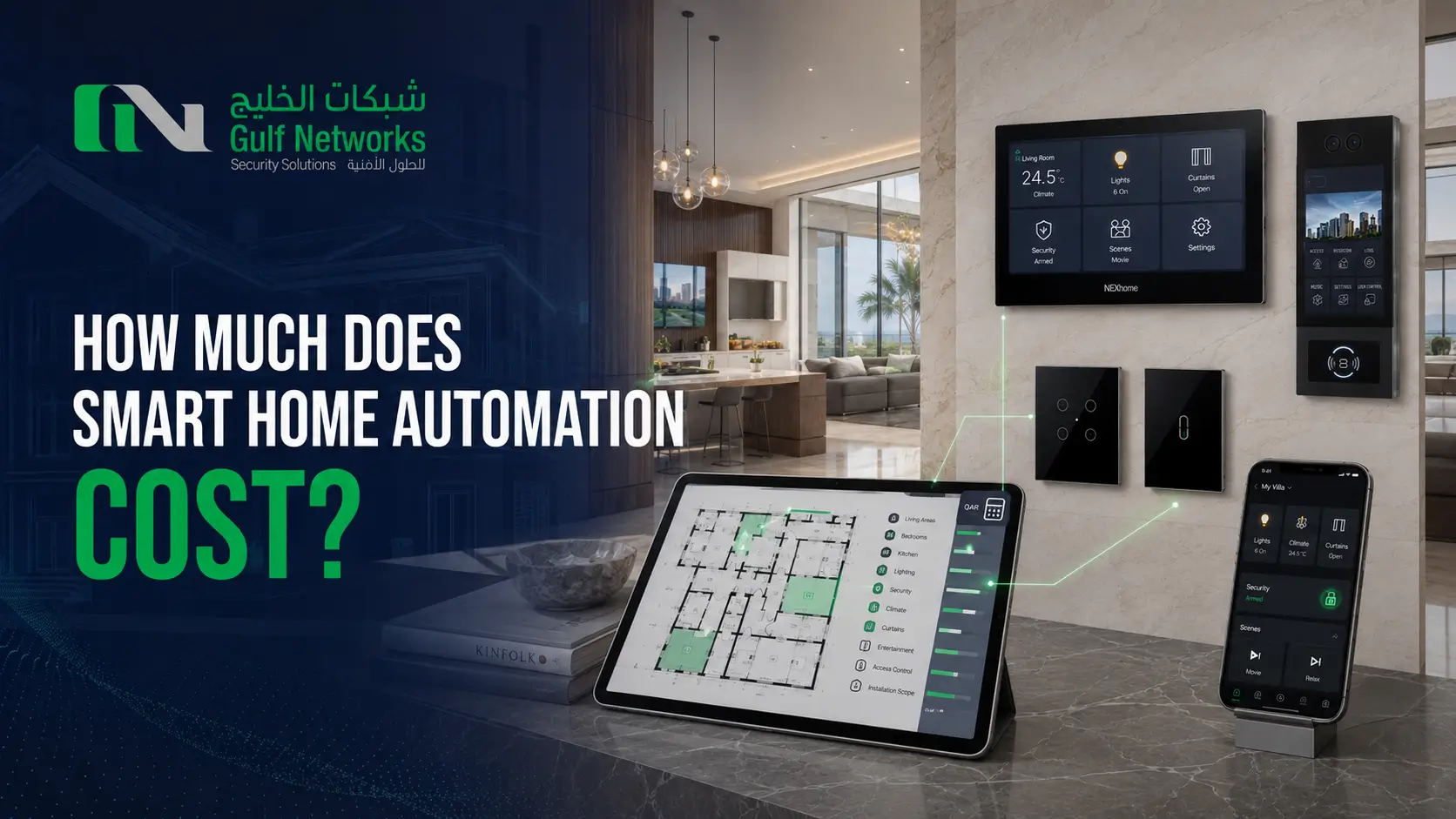
How Much Does Smart Home Automation Cost in Qatar? A Villa Buyer’s Guide
skip render: ucaddon_color_overlay_button skip render: ucaddon_color_overlay_button How Much Does Smart Home Automation Cost in Qatar? A Villa Buyer’s Guide One of the first questions homeowners ask when planning a connected villa is: how much does smart home automation cost? There is no single price that applies to every property. The final investment depends on the size of the villa, number of rooms, systems being automated, existing wiring, selected technology and whether the project is a new build or retrofit. A professionally planned smart home automation system can range from essential lighting and climate control to a fully integrated villa solution. A small project covering lighting and mobile control will naturally cost less than a complete villa automation system integrating lighting, air conditioning, motorized curtains, CCTV, video intercom, access control and smart locks. This guide explains the main factors that determine smart home automation cost and how villa owners in Qatar can plan a realistic automation budget. What Determines Smart Home Automation Cost? The biggest pricing factors are usually: Villa size Number of rooms and floors Number of controlled lighting circuits AC zones Curtains and blinds CCTV and security requirements Video intercom Smart locks and access control Wired vs wireless architecture New-build vs retrofit installation Touch panels and controllers Mobile and voice-control requirements Programming and automation scenes Network infrastructure Installation complexity Two villas of similar size can therefore have very different automation budgets. Villa Size and Number of Rooms Property size has a major influence on the total project scope. A larger villa normally requires more: Smart switches Sensors Controllers AC interfaces Curtain motors Network points Access devices Control panels Installation labour The number of rooms alone does not determine the final cost, but it provides a useful starting point when defining the project. Smart Lighting Cost Lighting is one of the most common components of a smart-home project. Pricing depends on the number of lighting circuits being controlled and whether functions such as dimming and scene control are required. Typical automation may include: On/off lighting control Dimming Room-based control Whole-floor control Motion-based lighting Scheduled lighting Welcome scenes Movie scenes Away modes Night modes A villa with extensive decorative lighting and many independently controlled circuits will require a larger system than a property with simpler lighting requirements. AC and Climate-Control Integration Air-conditioning control is especially relevant for villas in Qatar. Smart-home integration can allow compatible AC systems to be managed through wall panels, schedules and mobile applications. The cost depends on: Number of AC zones Installed HVAC system Available communication interfaces Thermostats or controllers required Integration method Required automation logic For new-build projects, planning AC integration during the MEP stage can simplify implementation. For existing villas, compatibility should be checked during a site survey. Motorized Curtains and Blinds Curtain automation costs depend on both the automation controls and the physical curtain system. Important factors include: Number of curtains Curtain dimensions Motor type Track length Available power Installation access Integration requirements Motorized curtains can operate independently or become part of larger scenes. For example, activating Movie Mode could close selected curtains, dim the lights and adjust the room environment automatically. Security and CCTV Integration Smart-home projects can also integrate security systems such as: CCTV cameras Video intercom Smart locks Access control Door sensors Window sensors Intrusion detection Gate automation Security integration can increase the overall project scope, but it also allows homeowners to manage more functions from a coordinated environment. GNSS works across smart-home, CCTV and low-voltage integration, allowing these systems to be planned together instead of as completely separate installations. New Build vs Retrofit Cost Whether the villa is under construction or already completed can significantly affect installation requirements. New-Build Home Automation During construction, the required electrical and network infrastructure can be planned before walls and ceilings are completed. This provides greater flexibility for: Dedicated cabling Central controllers Sensors Touch panels CCTV Curtain motors Access control Future expansion Retrofit Home Automation Existing villas require the automation system to work around current wiring and finished interiors. Wireless or hybrid solutions can often reduce the amount of modification required. However, the actual cost depends on the existing electrical system and what the homeowner wants to integrate. For a detailed comparison, read our new build vs retrofit home automation guide. Wired vs Wireless Smart Home Cost There is no universal rule that wired systems are always more expensive or wireless systems are always cheaper. Wired Systems Costs may include: Automation cabling Controllers Distribution panels Installation labour Programming Network infrastructure Wired systems are particularly practical when planned during construction. Wireless Systems Wireless technology can reduce certain cabling requirements and is often useful for retrofit projects. However, the final cost still depends on the number and type of devices installed. Hybrid Systems Many villas benefit from a combination of both. The objective should be to select the architecture that suits the property rather than simply choosing whichever technology appears cheaper initially. How Much Does a Smart Home Cost Per Room? Calculating smart-home automation strictly “per room” can be misleading. A bedroom may only require lighting and AC control, while a majlis or living room could include: Multiple lighting circuits Dimming Motorized curtains Climate control Audio/video Sensors Touch panels Automated scenes Similarly, security systems, network infrastructure and centralized controllers serve the entire property rather than one specific room. For this reason, a full project scope provides a more accurate estimate than a simple per-room calculation. Entry-Level vs Full Villa Automation A useful way to think about cost is by scope, rather than by one fixed package price. Essential Automation Typically focuses on: Smart lighting Selected AC control Mobile app Basic scenes This may suit homeowners who want to automate key daily functions first. Enhanced Villa Automation May include: Whole-home lighting Multi-zone AC control Motorized curtains Video intercom Smart locks Selected security integration Multiple automation scenes Fully Integrated Smart Villa Can include: Lighting throughout the villa Climate-control integration Curtains and blinds CCTV Video intercom Access control Smart locks Gate automation Network infrastructure Touch panels Centralized app control
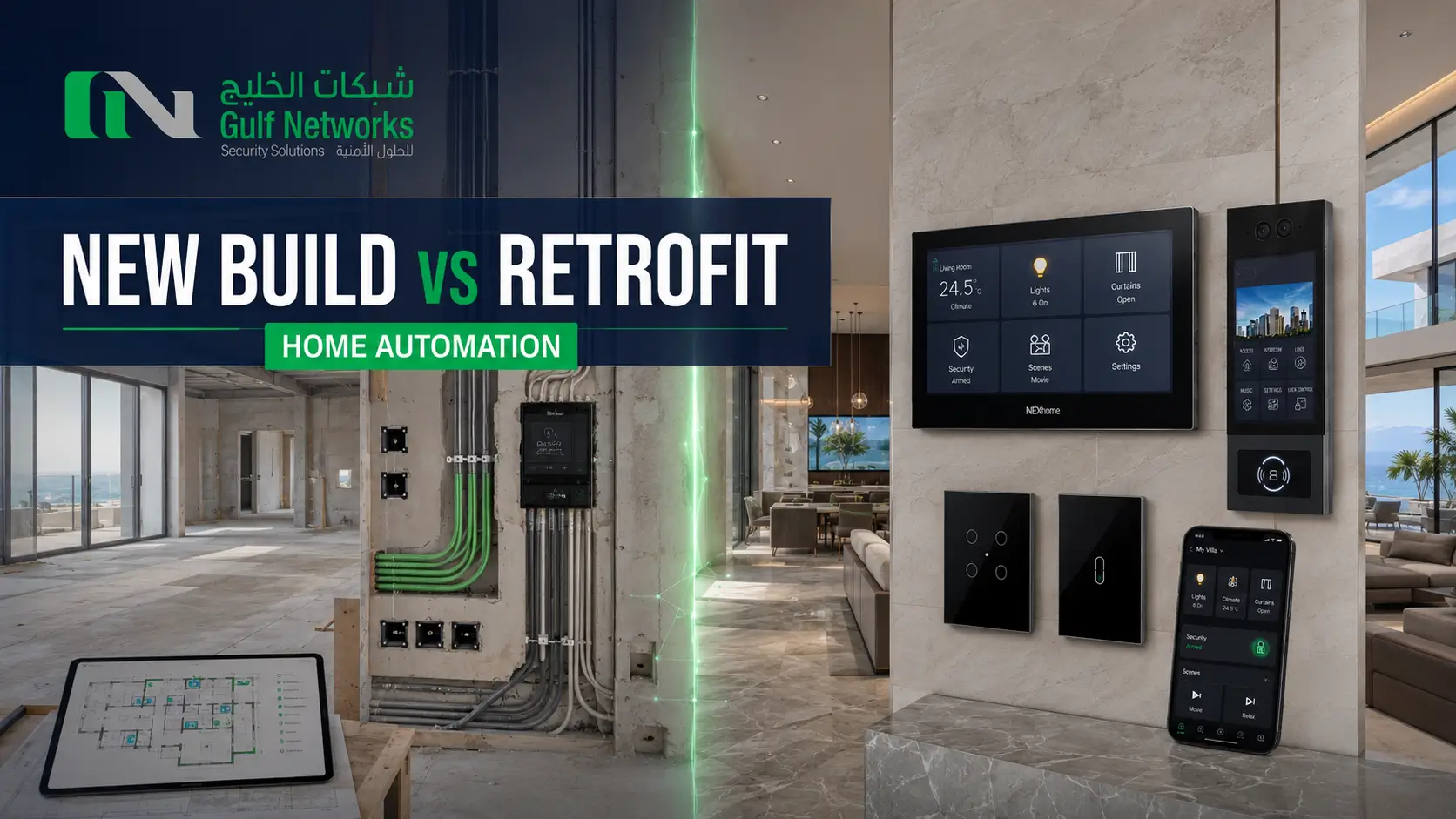
New Build vs Retrofit Home Automation: Which Is Right for Your Villa?
Compare new-build and retrofit home automation for villas, including wiring, installation, smart lighting, AC control, security integration and upgrade options.
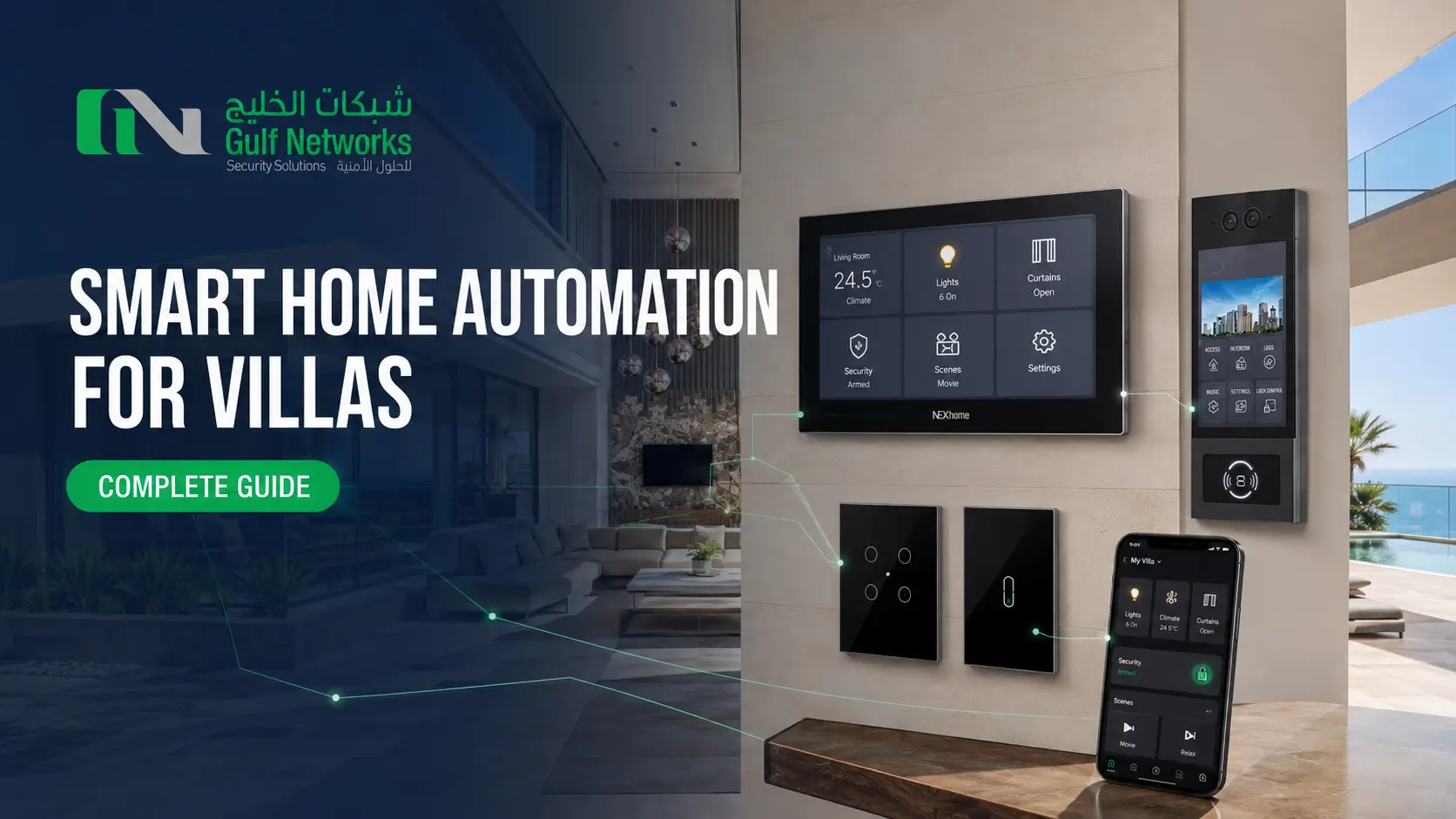
Smart Villa Automation: Complete Guide for Modern Villas
A complete guide to smart villa automation covering lighting, AC, curtains, security, access control, mobile app control, new-build and retrofit solutions.

