



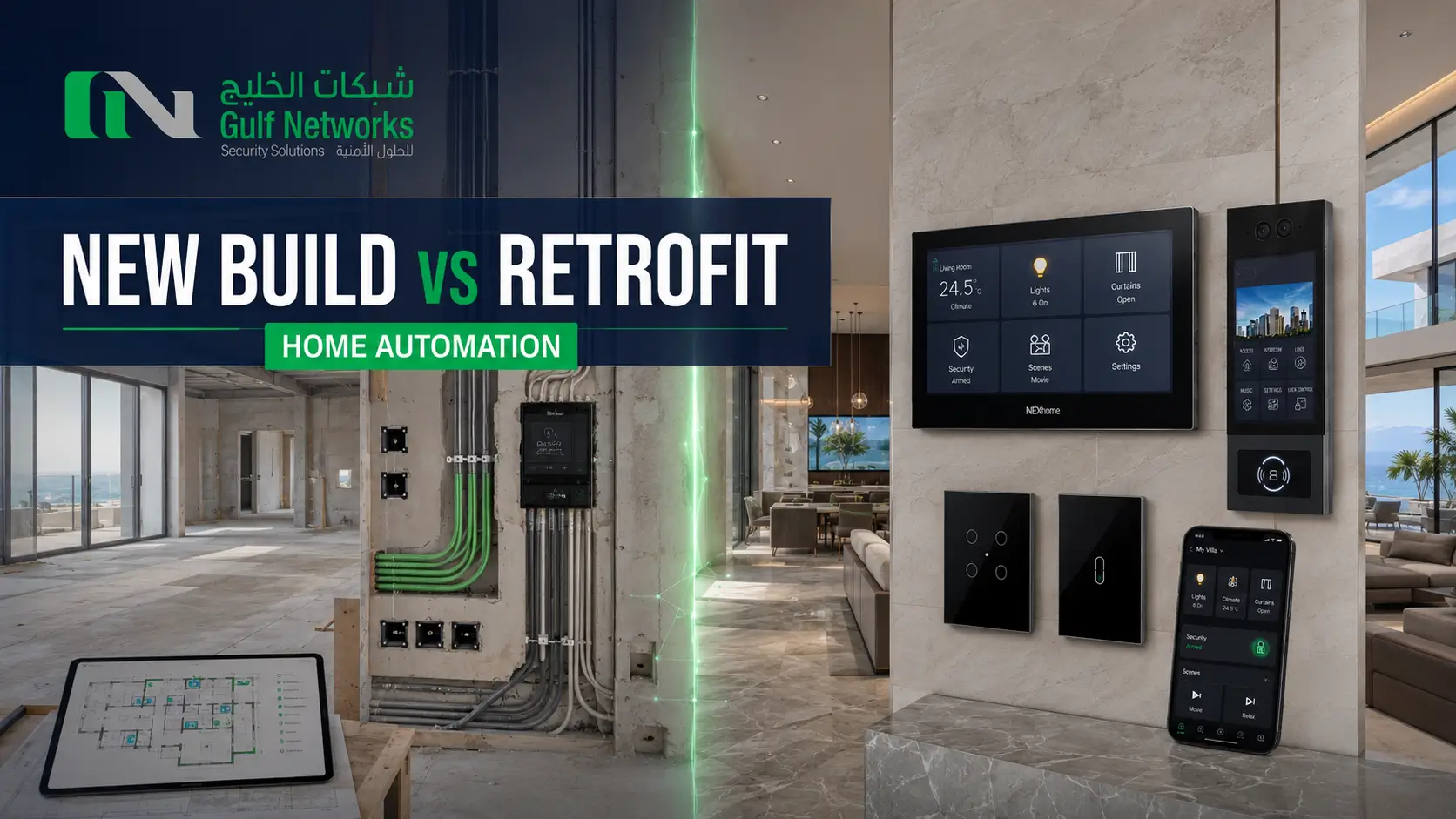
Retrofit home automation allows an existing villa to be upgraded with smart technology, while new-build automation is planned during construction. Both approaches can integrate lighting, AC control, curtains, security and other connected systems.
Both smart home automation approaches can provide intelligent control of lighting, air conditioning, curtains, security, access control and other connected systems. However, the installation method, infrastructure requirements and available options can differ significantly.
For homeowners planning a new villa, automation can be coordinated with electrical and network works from the beginning. For existing properties, retrofit home automation offers a practical way to introduce smart technology without rebuilding the entire home.
This guide compares both approaches and explains how to decide which option is right for your villa.
New build home automation is planned while a villa is still under design or construction.
Because the automation system is considered early, its requirements can be coordinated with electrical wiring, network infrastructure, lighting circuits, air-conditioning systems, motorized curtains, CCTV, video intercom, access control and other connected technologies.
This gives the project team more flexibility to prepare the required cabling, control panels, network points and equipment locations before walls, ceilings and finishes are completed.
For larger villas or projects that require multiple integrated systems, early planning can make installation cleaner, easier to manage and more scalable for future expansion.
New-build automation can be coordinated with:
Retrofit home automation means adding smart-home technology to an existing villa.
Because the property is already built and finished, the system normally needs to work around the existing electrical wiring, network infrastructure and interior finishes.
Depending on the property, retrofit solutions may use:
The objective is to introduce useful automation while minimizing unnecessary disruption to the property.
A professional site survey is therefore important before selecting the final devices and system architecture.
The main difference between the two approaches is when the automation system is planned.
Automation is designed alongside the property.
This allows cabling, equipment locations, network infrastructure and control requirements to be planned before construction is completed.
Automation is introduced after the villa has already been built.
The solution must therefore work around the existing wiring, installed systems and finished interiors.
Both approaches can create an effective smart villa, but the design and installation strategy will be different.
New construction provides the greatest flexibility for structured cabling and dedicated automation infrastructure.
Required cables can be installed before walls and ceilings are closed.
This can make it easier to prepare for:
Early planning can also reduce the need for later modifications.
Existing villas may not have dedicated automation cabling.
In these cases, wireless technologies or hybrid solutions can provide a practical alternative.
Existing electrical wiring may sometimes be retained while smart switches, controllers and compatible devices are added.
The best solution depends on the condition and layout of the existing infrastructure.
Lighting is one of the most common systems automated in both new and existing villas.
In a new build, lighting circuits can be planned specifically for smart control.
Homeowners can create scenes such as:
In retrofit projects, existing switches can often be upgraded or replaced with compatible smart controls.
This allows many existing villas to gain smart lighting without completely rewiring the property.
Air-conditioning integration is particularly important in Gulf homes.
Smart climate control can allow homeowners to manage temperature, schedules and compatible AC functions from wall panels or mobile applications.
For new villas, AC automation requirements can be coordinated during the electrical and MEP design stages.
For existing villas, integration depends on the installed AC system and available control interfaces.
A site survey helps determine what level of integration is possible.
New-build villas can prepare power points and control wiring for motorized curtains before finishing work begins.
This can make installation cleaner and easier to coordinate.
Existing villas can also add motorized curtains, but the installer needs to assess:
Once integrated, curtains can operate from wall switches, mobile applications, schedules or automation scenes.
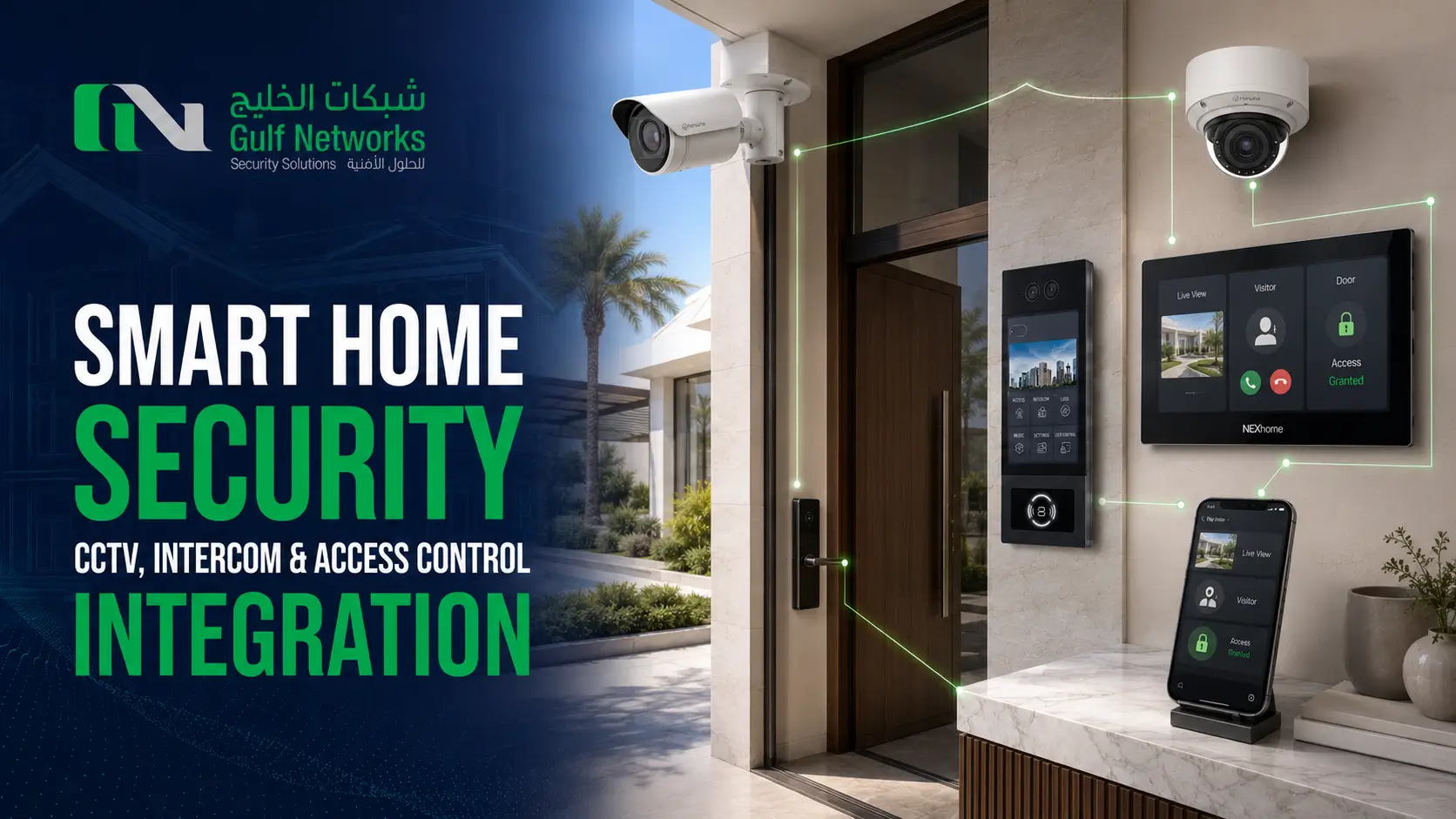
Smart home automation can also work alongside security technologies such as:
For new-build villas, these systems can be planned together as part of one coordinated low-voltage infrastructure.
For retrofit projects, compatible existing systems may sometimes be integrated while selected components are upgraded.
This is one area where working with an experienced systems integrator can be particularly useful.
New-build does not automatically mean everything must be wired, and retrofit does not mean everything must be wireless.
Many properties use a combination of both.
Wired systems can provide structured communication between controllers, sensors and other devices.
They are particularly practical when the required cabling can be installed during construction.
Wireless systems can reduce the need for additional cabling and can be especially useful when upgrading finished villas.
A hybrid system combines wired and wireless technologies.
For example, a villa may retain wired CCTV and network infrastructure while adding wireless smart lighting, sensors or curtain controls.
The correct architecture depends on the property and required functions.
For major automation projects, new-build planning generally provides greater flexibility because the infrastructure can be prepared from the beginning.
However, modern retrofit systems can still provide extensive smart-home functionality.
The right decision depends on:
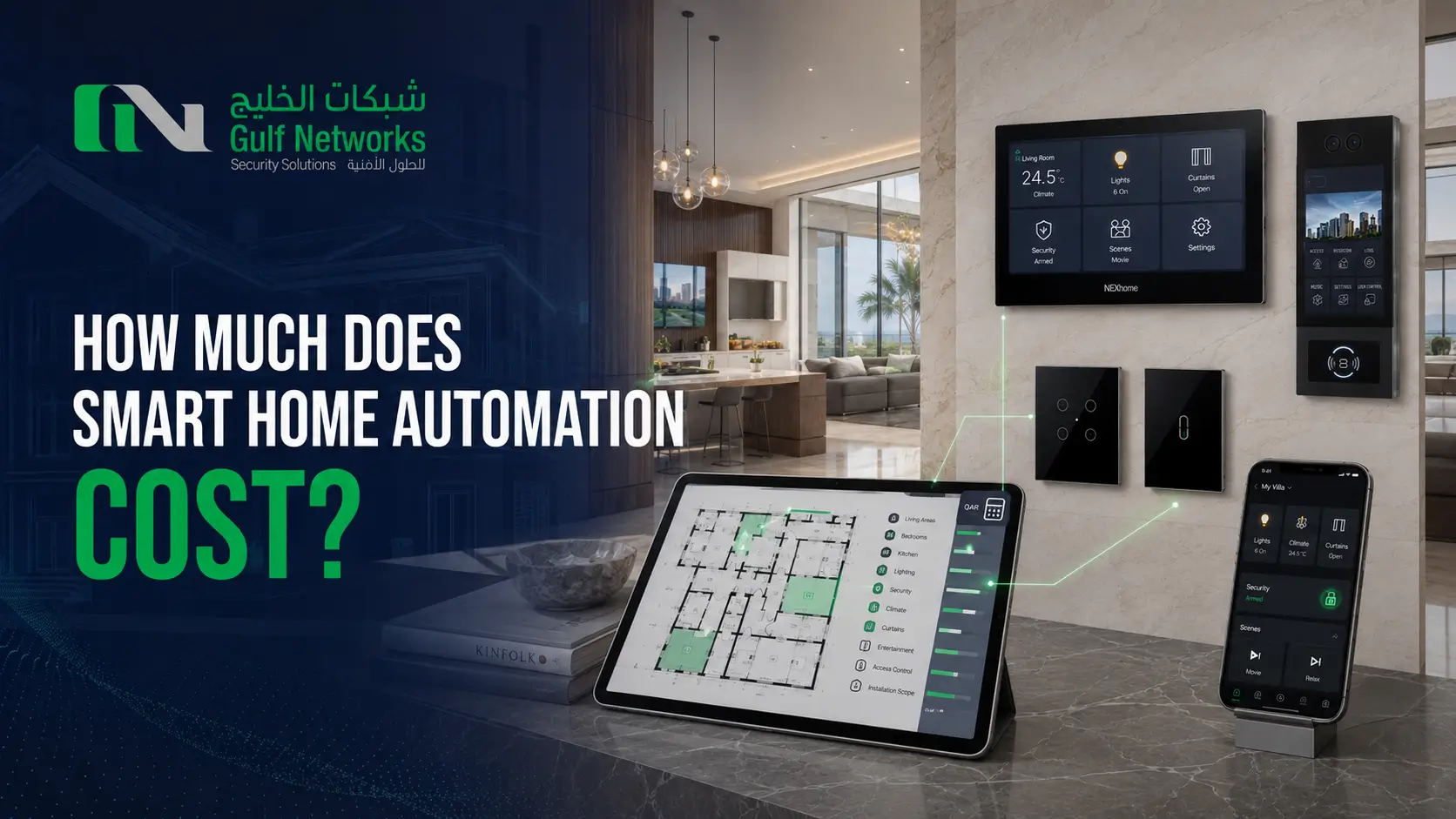
Budget is another important factor when comparing new-build and retrofit systems. Read our smart home automation cost in Qatar guide to understand how villa size, wiring, lighting, AC, security and installation requirements can affect the overall project cost.
When smart home automation is planned during construction, the required wiring and equipment can be installed alongside other electrical and low-voltage works.
This usually minimizes additional disruption.
Retrofit projects require more careful planning because the property is already finished.
Wireless and hybrid technologies can help reduce unnecessary wall cutting and major modifications wherever practical.
In many cases, yes.
An existing villa may still support:
However, the exact capabilities depend on the existing wiring, installed systems and network infrastructure.
A site assessment should therefore come before final product selection.
If you are constructing a new villa, smart home requirements should ideally be discussed before electrical and finishing works are finalized.
The project may involve coordination between:
Early coordination helps reduce conflicts between systems and allows cabling, control panels and equipment locations to be planned properly.
For an existing villa, the process should usually begin with a site survey.
The integrator can inspect:
A practical retrofit plan can then be developed around the current infrastructure.
For villas in Qatar, smart home planning often places particular emphasis on climate control, security, reliable network connectivity and ease of everyday operation.
New-build villas can coordinate automation with electrical, MEP, networking and security infrastructure from an early stage.
Existing villas can also benefit from retrofit or hybrid smart home solutions designed around the current wiring and interior finishes.
Local technical support is also important because smart home systems may require programming, integration, future expansion and ongoing support after installation.
Neither option is automatically better.
New build home automation is ideal when you have the opportunity to plan the complete infrastructure before construction is finished.
Retrofit home automation is the practical option when you already have a villa and want to upgrade it with smart technology.
The best solution is the one designed around the actual property, lifestyle requirements and long-term plans.
Gulf Networks Security Solutions provides smart home automation and integrated low-voltage solutions for both new and existing properties.
For new-build villas, GNSS can coordinate automation requirements with electrical, network and security infrastructure.
For existing villas, our team can assess the current systems and recommend suitable retrofit or hybrid solutions.
Depending on project requirements, smart home integration can include:
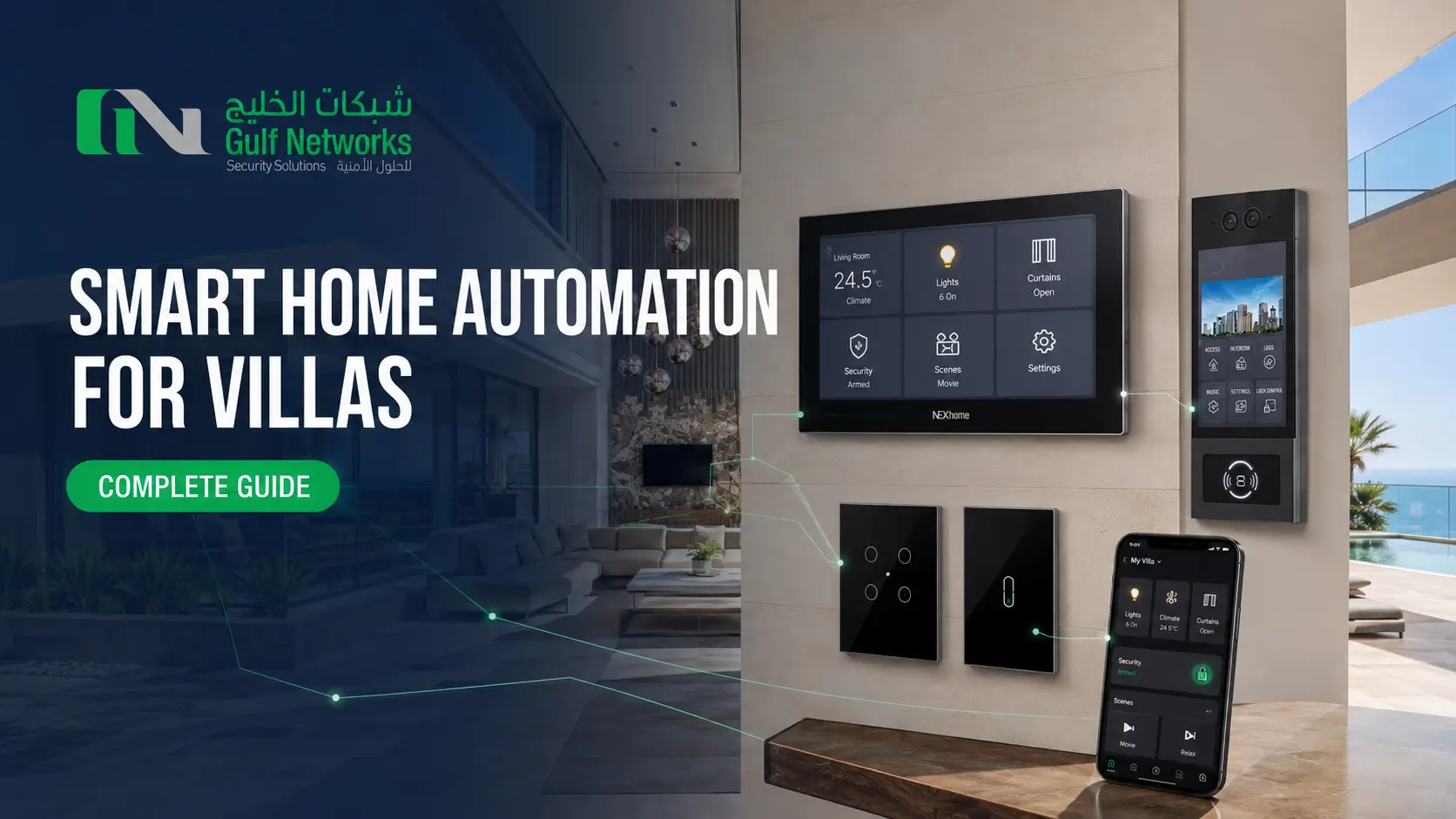
For a wider overview of villa automation, read our complete guide to smart villa automation.
You can also explore our smart home automation solutions for villas and residential properties.
Yes. Many existing villas can be upgraded using retrofit, wireless or hybrid smart home systems. The available options depend on the existing electrical and network infrastructure.
Wired systems can be particularly suitable for new-build projects because cabling can be planned before construction is completed. However, some villas may still benefit from a hybrid approach.
Not always. Wireless and hybrid systems can often reduce the need for extensive new cabling, although some modifications may still be required depending on the property.
Yes, provided the installed lighting circuits, switches and AC systems are compatible with the selected automation solution.
Compatible CCTV, video intercom, smart locks and access control systems can often be integrated as part of a retrofit project.
Ideally, automation requirements should be considered during the design stage and before electrical, network and finishing works are completed.

DISCUSS YOUR PROJECT
GNSS supports projects from system design and product selection through installation, integration, testing and technical support.
Sign up today for hints, tips & the latest product news
 Optimized by Seraphinite Accelerator